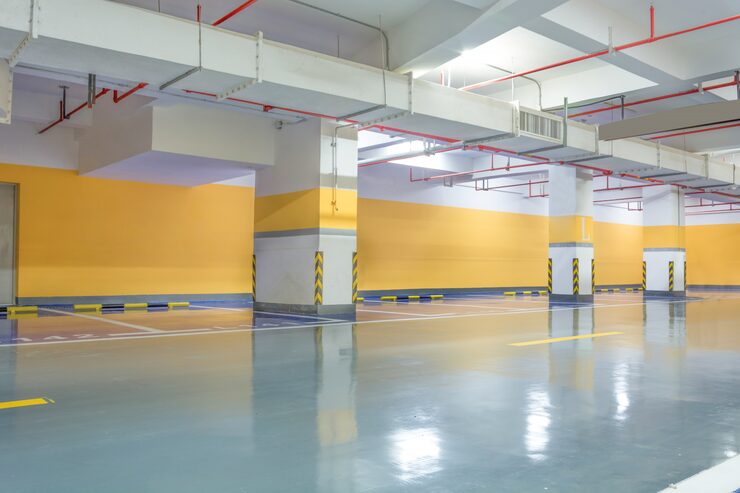
Not every business has the same floor problem. A warehouse worries about forklifts, a shop owner cares about appearance, and a garage manager deals with oil. Fortunately, epoxy adapts to all of them. Let us walk through the spaces where commercial epoxy floor coating delivers the biggest everyday advantages.
Why Each Industry Needs Commercial Epoxy Flooring
Different industries lean on the same material for different reasons. Here is a quick look at five common settings:
- Warehouses: Epoxy withstands rolling loads and keeps dust down in storage zones.
- Retail shops: A glossy, clean finish helps products stand out and supports a welcoming image.
- Restaurants and kitchens: The seamless surface is easier to sanitize than grout lines and tile.
- Garages and workshops: Oil, grease, and tools meet a tough, wipe clean layer.
- Showrooms: Metallic and decorative systems create a polished backdrop for displays.
Each of these settings values durability, but each defines it differently. A restaurant cares about hygiene first, while a warehouse cares about impact. Understanding your own priority helps you select the right system. As a result, you invest in performance where it matters most instead of paying for features you will never use.
Warehouse and Retail Needs for Commercial Epoxy Floor Coating
In warehouses, floors take constant punishment. Pallet jacks, forklifts, and heavy racks all test the surface every day. A thicker system with a hard topcoat resists that abuse and makes cleaning easier. Painted lane markings can also be added, which helps workers move safely through busy aisles.
Retail spaces face a different challenge. Customers notice the floor even when they do not realize it. A bright, even surface makes the store feel organized and trustworthy. Because commercial epoxy flooring can include color blends and flakes, owners can match the look of the brand without giving up toughness.
Commercial Epoxy Flooring in Restaurants and Service Areas

Food service areas demand cleanliness. Epoxy has no open seams, so crumbs, grease, and liquids stay on the surface where staff can remove them. Cleaning crews can mop quickly at the end of a shift. Therefore, many kitchen managers see epoxy as a practical partner in keeping standards high.
Service garages benefit in similar ways. Vehicles drip fluids, tires leave marks, and tools drop without warning. An epoxy layer handles much of this punishment better than raw concrete. Moreover, a bright floor makes small parts and spills easier to spot, which improves safety and keeps the workspace organized.
Showrooms, Offices, and Commercial Epoxy Floor Coating Style
Showrooms and offices focus on first impressions. Metallic effects, soft gray tones, and smooth satin finishes create a modern, professional atmosphere. Visitors feel the difference immediately. At the same time, staff gain a floor that resists scuffs and cleans easily, which keeps the look fresh through long days of foot traffic.
Style should still respect safety. Entrances and wet areas may need extra traction, so ask your installer about textured options. A thoughtful design balances beauty and grip. When both goals are met, the floor becomes a quiet asset that supports your brand and protects the people who use it.
Final Thoughts on Commercial Epoxy Flooring
Epoxy earns its place across many industries because it solves real problems. It stands up to heavy use, cleans without fuss, and offers design choices that suit different brands. The key is matching the system to your own space and daily routine.
Think about where your current floor struggles most, then speak with a knowledgeable installer. Describe your traffic, your spills, and your style goals. With that information, you can get a clear recommendation and a plan that turns a weak floor into a dependable part of your business.
About the Author